Table of Contents
Introduction
Nobody likes opening the fridge to find their perfectly ripe avocado has turned an unappetizing brown overnight. If you’re wondering how to keep avocado fresh after cutting, you’re not alone—this is one of the most common kitchen frustrations. The good news? With the right storage techniques, you can significantly slow down browning and enjoy your leftover avocado for days instead of hours.
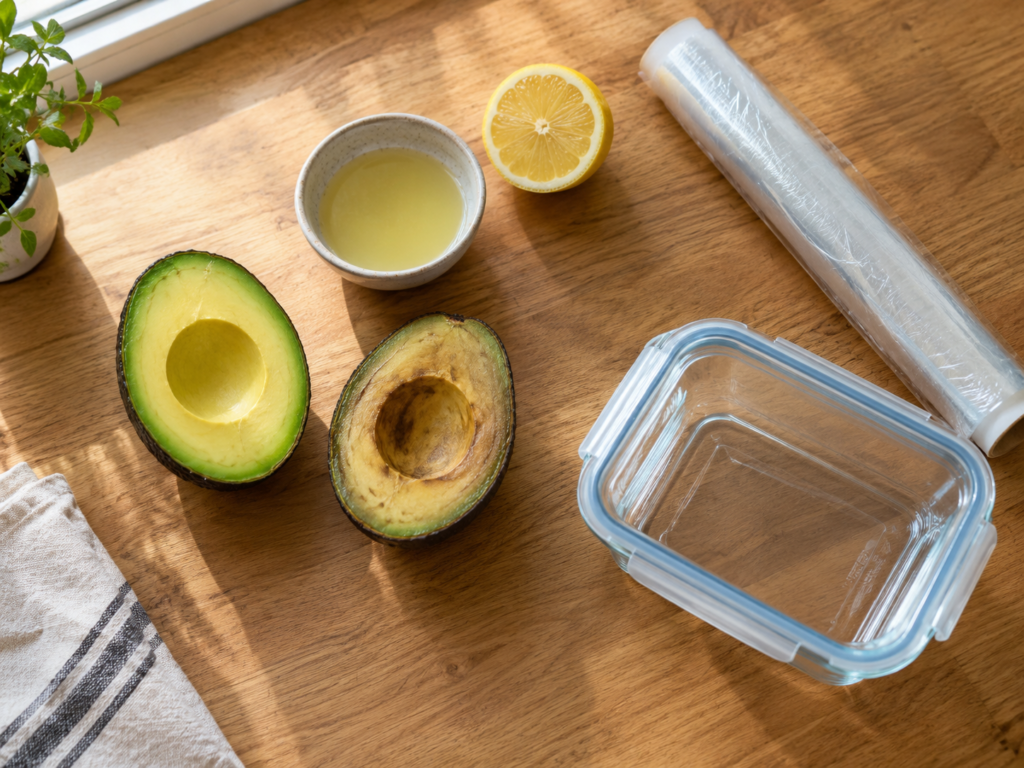
In this guide, you’ll learn exactly why avocados brown, when brown avocado is still safe to eat, and five powerful, science-backed tricks to keep your cut avocado looking fresh and green. We’ll also cover freezing options, spoilage signs, and the single best method for everyday storage.
Why Does Avocado Turn Brown After Cutting?
That frustrating color change from vibrant green to dull brown happens because of a natural chemical process called enzymatic browning.
The Science Behind the Browning
When you slice into an avocado, you rupture millions of tiny cell walls inside the fruit. This exposes two key components that were previously separated:
- Polyphenol oxidase (PPO): An enzyme naturally present in avocado cells
- Phenolic compounds: Small molecules with antioxidant properties
Once these meet oxygen in the air, PPO catalyzes a reaction that converts the phenolic compounds into quinones. These quinones then polymerize (link together into long chains) to form melanins—the same brown pigments that color human hair and skin.
This oxidation process happens quickly—often becoming noticeable within just two to three hours of exposure.
Browning vs. Spoilage: What’s the Difference?
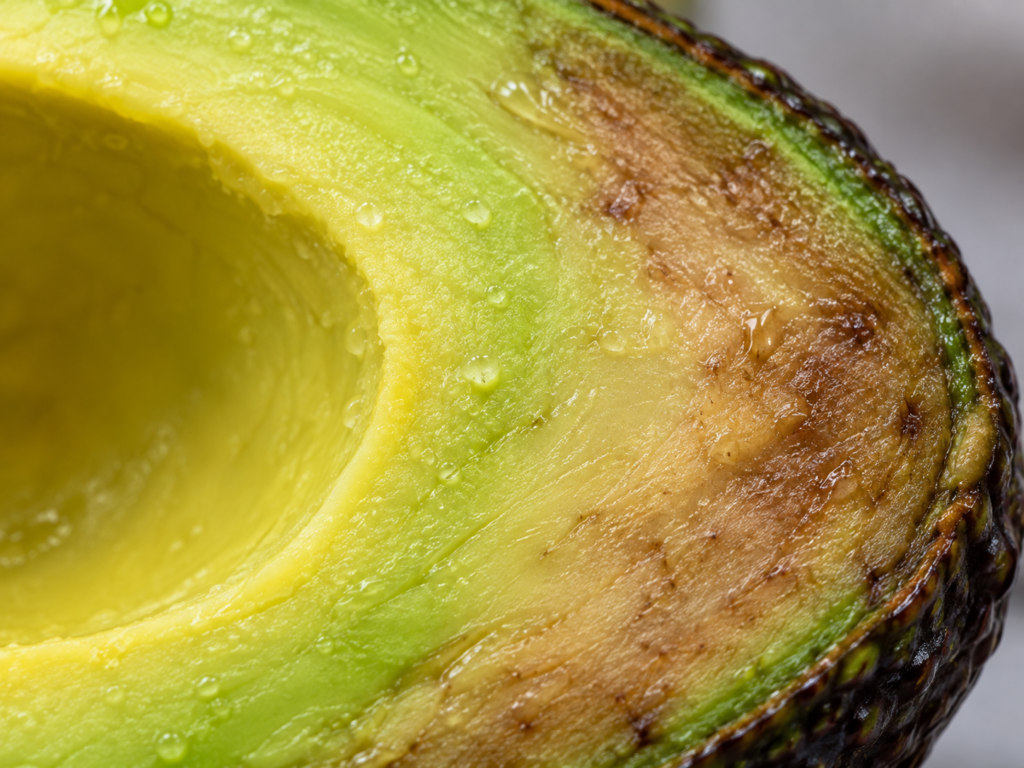
It’s crucial to understand that browning from oxidation is not the same as spoilage. An avocado that has turned brown from air exposure is generally still safe to eat, though it may taste slightly bitter.
True spoilage involves additional warning signs like mold growth, unpleasant odors, or slimy texture—topics we’ll cover in detail below.
Is Brown Avocado Safe to Eat?
Yes, in most cases. Surface browning alone doesn’t automatically mean your avocado has gone bad.
When Slight Browning Is Generally Harmless
If your cut avocado has developed a light brown or grayish tint on the surface but shows no other warning signs, it’s typically safe to consume. You can simply scrape or cut away the oxidized layer and use the green flesh underneath.
Signs That Indicate an Avocado Should Be Discarded
Throw away your avocado if you notice any of these spoilage indicators:
- Mold: Visible fuzzy growth (white, gray, or black) on the skin or flesh
- Unpleasant smell: A sour, rancid, or “off” odor (fresh avocado has a mild, slightly nutty scent)
- Unusual texture: Slimy, mushy, or watery flesh that falls apart when touched
- Deep discoloration: Black or very dark brown areas throughout the flesh (not just surface browning)
- Strange taste: If it tastes bitter, sour, or otherwise unpleasant, discard it
Remember: avocados have high moisture content, making them particularly susceptible to mold growth. Any visible mold means the entire avocado should be tossed, even if it appears only on the skin.
5 Powerful Tricks to Keep Avocado Fresh After Cutting
These five methods work by limiting oxygen exposure, slowing enzymatic activity, or both. For best results, combine multiple techniques.
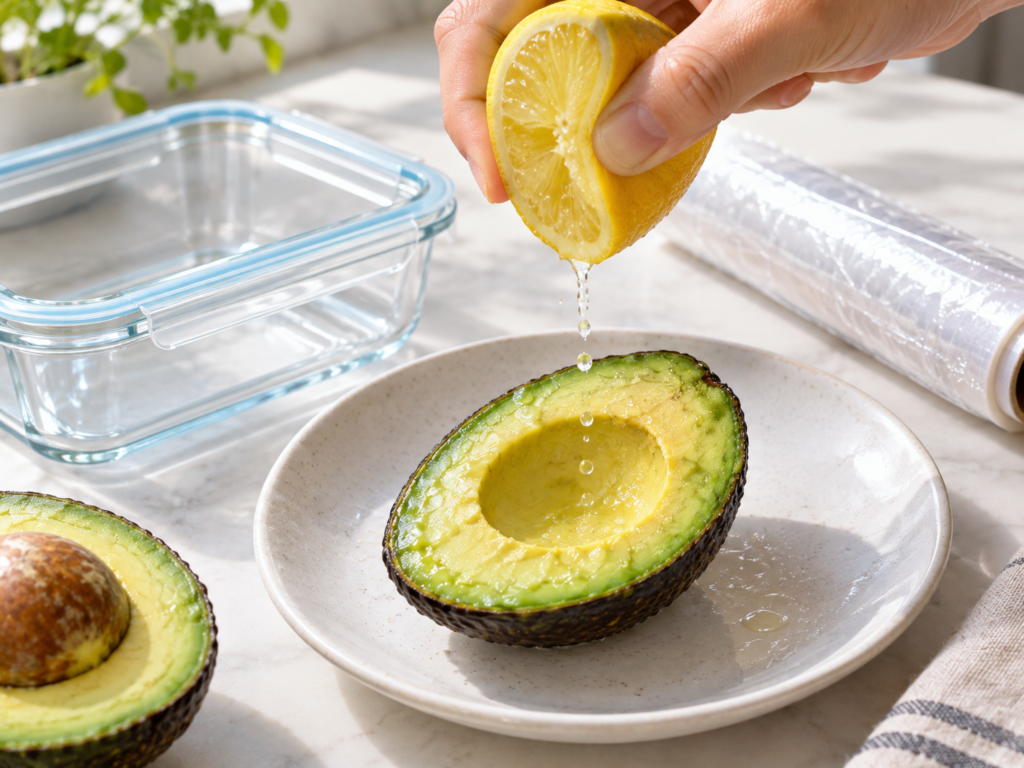
1. Brush the Cut Surface With Lemon or Lime Juice
Why it works: Citrus juice contains citric acid and ascorbic acid (vitamin C), both of which lower the pH of the avocado’s surface. This acidic environment decreases the activity of the PPO enzyme, slowing the browning reaction.
How to do it:
- Squeeze fresh lemon or lime juice onto a small brush or use your fingers
- Apply a thin, even layer to the entire exposed flesh surface
- Cover the avocado afterward using plastic wrap or an airtight container
- Refrigerate promptly
Important note: Too much juice can alter the flavor, making your avocado taste overly citrusy. A light coating is sufficient. Bottled lemon juice works, though fresh is preferable for taste.
This is one of the most effective ways how to keep cut avocado fresh for an extra day or two.
2. Store the Avocado in an Airtight Container
Why it works: Reducing the amount of air around the avocado minimizes oxygen exposure, which directly slows the oxidation process.
How to do it:
- Choose a small airtight food container that fits the avocado snugly (less empty space = less oxygen)
- Place the avocado cut side down when practical—this creates a physical barrier between the flesh and air
- If storing avocado halves with the pit, position them so the cut surface faces the container bottom
- Seal the container tightly
- Refrigerate promptly—don’t leave cut avocado at room temperature
Pro tip: For diced or sliced avocado, transfer all pieces to the container, add a squeeze of lemon juice, seal tightly, and refrigerate. This method can extend freshness to 3–4 days according to the National Center for Home Food Preservation.
Learning how to store cut avocado properly is essential for meal prep and reducing food waste.
3. Cover the Surface With Plastic Wrap
Why it works: Plastic wrap pressed directly against the avocado flesh creates a physical barrier that blocks oxygen from reaching the surface.
How to do it:
- Tear off a piece of plastic wrap large enough to cover the entire cut surface
- Press the wrap directly against the exposed flesh, smoothing out any air pockets or bubbles
- Wrap tightly around the entire avocado half if possible
- Refrigerate immediately after wrapping
Why reducing oxygen exposure helps: Remember, the browning reaction requires three components: PPO enzyme, phenolic compounds, and oxygen. By eliminating oxygen contact with the flesh, you effectively stop the reaction at its source.
Best practice: Combine this method with lemon juice application and airtight container storage for maximum protection.
4. Keep the Avocado With Its Pit
The common idea: Many people believe leaving the pit in the unused half somehow “magically” prevents browning throughout the avocado.
What actually happens: The pit only protects the area physically underneath it from air exposure. It works the same way plastic wrap does—by creating a barrier between the flesh and oxygen. The exposed portions around the pit will still brown normally.
How to use this method effectively:
- Leave the pit in the unused half (it doesn’t hurt and provides some protection)
- Still apply lemon or lime juice to the exposed surface
- Combine with an airtight container or plastic wrap for full coverage
- Refrigerate promptly
Bottom line: Keeping the pit in is fine, but don’t rely on it alone. It’s a supplementary measure, not a complete solution.
5. Refrigerate It Properly
Why it works: Cold temperatures slow down enzymatic reactions and microbial growth, extending the avocado’s freshness window.
How to do it:
- Put cut avocado in the refrigerator promptly—within 2 hours of cutting at most
- Keep it in a sealed container or tightly wrapped in plastic
- Store in the crisper drawer or vegetable compartment where temperature is most consistent
- Avoid leaving cut avocado at room temperature for extended periods (beyond 2 hours)
Temperature matters: Room temperature accelerates both oxidation and spoilage. Refrigeration at 35–40°F (2–4°C) is ideal for cut avocado storage.
Expert recommendation: “Once an avocado is cut, it must go into the refrigerator within two hours,” according to food safety guidelines.
How Long Does Cut Avocado Stay Fresh?
Freshness depends on the avocado’s ripeness at cutting, handling, storage temperature, and which preservation methods you use. Here’s a practical reference table:
| Storage Method | Expected Freshness | Notes |
|---|---|---|
| Airtight container (refrigerated) | 1–2 days | Basic short-term storage; minimal browning protection |
| Lemon/lime juice + airtight container | 2–3 days | Acid slows enzymatic browning; best everyday method |
| Plastic wrap directly on flesh | 1–2 days | Reduces air exposure; combine with other methods for best results |
| Pit + covering (wrap or container) | 1–2 days | Pit protects only area underneath; still needs full coverage |
| Refrigeration alone (no other method) | 1 day max | Oxidation continues; surface will brown quickly |
| Diced avocado + lemon juice + airtight | 3–4 days | Maximum fridge life per food preservation guidelines |
Important: These are general guidelines, not guarantees. An overripe avocado cut at peak softness may last only 1 day, while a firmer, just-ripe avocado stored optimally might reach 3–4 days. Always check for spoilage signs before consuming.
How to Tell If a Cut Avocado Has Gone Bad
Signs of Spoilage
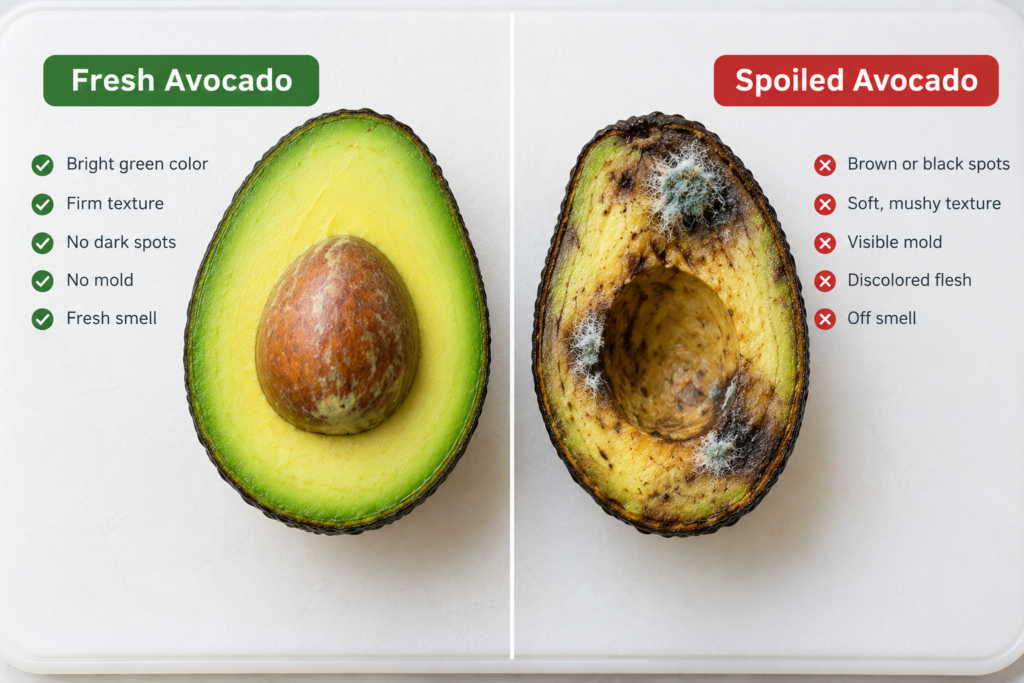
Inspect your stored avocado for these red flags before eating:
- Mold: Any fuzzy growth (white, gray, green, or black) on the surface
- Strong unpleasant or sour smell: Fresh avocado smells mild and slightly nutty; spoiled avocado smells rancid or fermented
- Slimy or unusually soft texture: Flesh that feels slippery, mushy, or disintegrates when touched
- Significant discoloration with other spoilage signs: Deep black or dark brown areas throughout (not just surface browning), especially when accompanied by odor or texture changes
Browning vs. Spoilage
This distinction is critical for reducing unnecessary food waste:
| Browning (Oxidation) | Spoilage |
|---|---|
| Light brown or gray surface color | Deep black or dark brown throughout |
| No unusual odor | Sour, rancid, or “off” smell |
| Firm or slightly soft texture | Slimy, mushy, or watery texture |
| Safe to eat after scraping off brown layer | Should be discarded entirely |
| Happens within hours of cutting | Develops over days, especially with improper storage |
Key takeaway: Brown surface alone ≠ automatically spoiled. Scrape off the oxidized layer and inspect the green flesh underneath. If it looks, smells, and feels normal, it’s safe to eat.
Can You Freeze Cut Avocado?
Yes, you can freeze avocado, but there are important texture trade-offs to understand.
What Happens When You Freeze Avocado
Freezing ruptures the avocado’s cell walls. After thawing, the flesh becomes:
- Softer and mushier than fresh avocado
- Watery, with liquid separation
- Less vibrant in color (may turn grayish-brown over time in the freezer)
- Flatter in flavor if eaten plain
Where Frozen Avocado Works Well
Thawed avocado is best used in recipes where texture changes won’t matter:
- Smoothies: Blend frozen chunks directly into drinks
- Guacamole: Mash thawed avocado with seasonings
- Spreads and dips: Mix into creamy sauces or wrap fillings
- Salad dressings: Purée with oil, vinegar, and herbs
- Baking: Use in recipes where avocado is mashed or blended
How to Freeze Avocado Properly
- Cut and pit the avocado
- Brush with lemon or lime juice (helps preserve color)
- Mash or leave in chunks depending on intended use
- Place in airtight freezer bags or containers (remove as much air as possible)
- Label with date; use within 3–4 months for best quality
- Thaw in the refrigerator for 6–8 hours or overnight before using
Important: Frozen avocado won’t have the same texture as fresh, so don’t expect to make avocado toast or sliced salads from thawed fruit. Plan ahead for blended or mashed applications.
Best Method to Keep Avocado Fresh After Cutting
For everyday storage, here’s the simplest, most effective approach:
- Brush the exposed surface lightly with lemon or lime juice (prevents enzymatic browning)
- Place the avocado in an airtight container (minimizes oxygen exposure)
- Refrigerate promptly (slows all degradation processes)
- Use it as soon as practical (ideally within 1–2 days for best quality)
This combination gives you the best balance of convenience and effectiveness without requiring special equipment or complicated steps.
Frequently Asked Questions
How do you keep avocado fresh after cutting?
To keep avocado fresh after cutting, brush the exposed flesh with lemon or lime juice, wrap tightly in plastic wrap or place in an airtight container, and refrigerate promptly. This combination slows oxidation and can extend freshness to 2–3 days.
Does lemon juice keep avocado from turning brown?
Yes. Lemon juice contains citric acid and ascorbic acid (vitamin C), which lower the pH of the avocado’s surface and decrease the activity of the polyphenol oxidase enzyme responsible for browning. This slows the oxidation process and helps maintain green color for longer.
Should cut avocado be refrigerated?
Absolutely. Cut avocado must be refrigerated within 2 hours of slicing. Cold temperatures slow enzymatic browning and microbial growth, extending freshness. Never leave cut avocado at room temperature for extended periods.
Can you eat an avocado that has turned brown?
Yes, surface browning from oxidation doesn’t necessarily mean spoilage. If the avocado shows no mold, unpleasant odor, or slimy texture, you can scrape off the brown layer and eat the green flesh underneath. Discard only if additional spoilage signs are present.
How long does a cut avocado last in the fridge?
Properly stored cut avocado typically lasts 1–2 days in the refrigerator. With optimal methods (lemon juice + airtight container), you may extend this to 2–3 days, and diced avocado with acid can reach 3–4 days. Freshness varies based on ripeness and storage conditions.
Does keeping the avocado pit in prevent browning?
The pit only protects the area directly underneath it from air exposure. It doesn’t prevent browning of the surrounding exposed flesh. Leave the pit in if you like, but still use lemon juice and airtight storage for full protection.
Can you freeze avocado after cutting it?
Yes, but expect texture changes. Frozen and thawed avocado becomes softer, mushier, and may release water. It works best in smoothies, guacamole, dips, and dressings where texture isn’t critical. Not ideal for slicing or avocado toast.
Final Thoughts
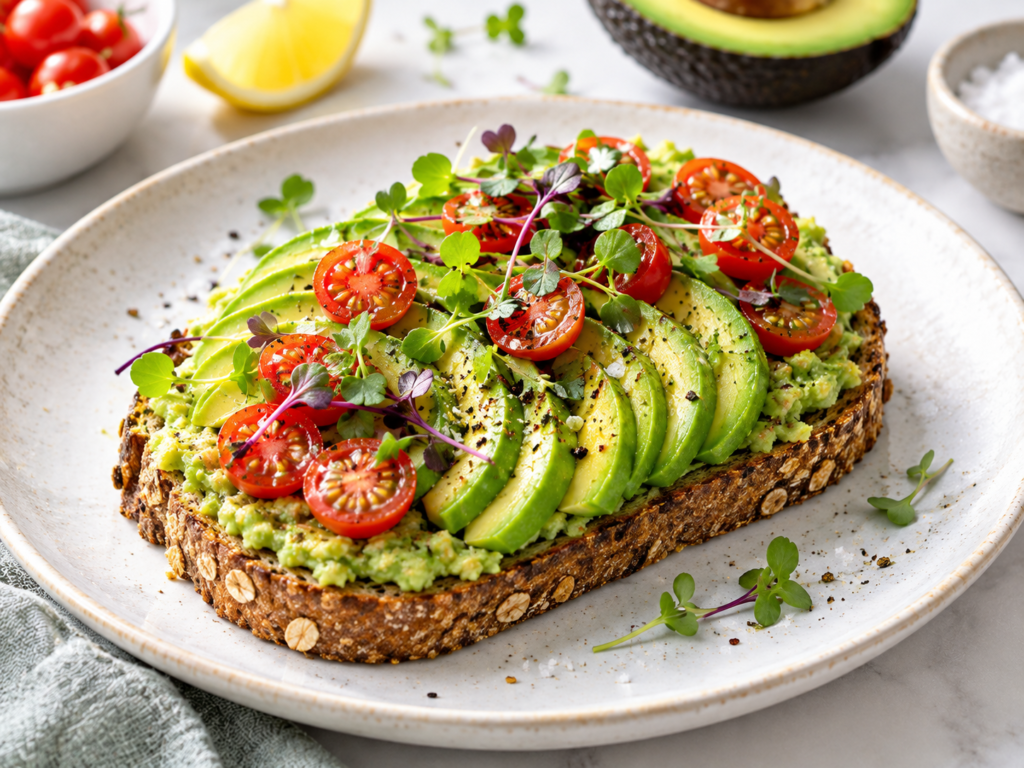
Keeping your cut avocado fresh doesn’t require fancy gadgets or complicated techniques. Remember these five powerful tricks:
- 🍋 Lemon/lime juice: Acid slows enzymatic browning
- 🥑 Airtight container: Minimizes oxygen exposure
- 🥡 Plastic wrap: Creates a physical barrier on the flesh
- 🥑 Keep the pit: Provides partial protection (combine with other methods)
- ❄️ Refrigerate promptly: Cold slows all degradation processes
With the right storage method, you can slow browning and enjoy your leftover avocado instead of wasting it.