Written by Naeem ul Hasan, Founder, AvocadoFromUSA · Researched and fact-checked using USDA FoodData Central and peer-reviewed nutrition research. Last updated September 2026.
Most Americans eat only about half the fiber they need daily. Here are 4 avocado fiber benefits backed by real clinical research — plus what the science says about a couple of related claims you’ll see elsewhere that deserve more nuance.
How Much Fiber Is In an Avocado?
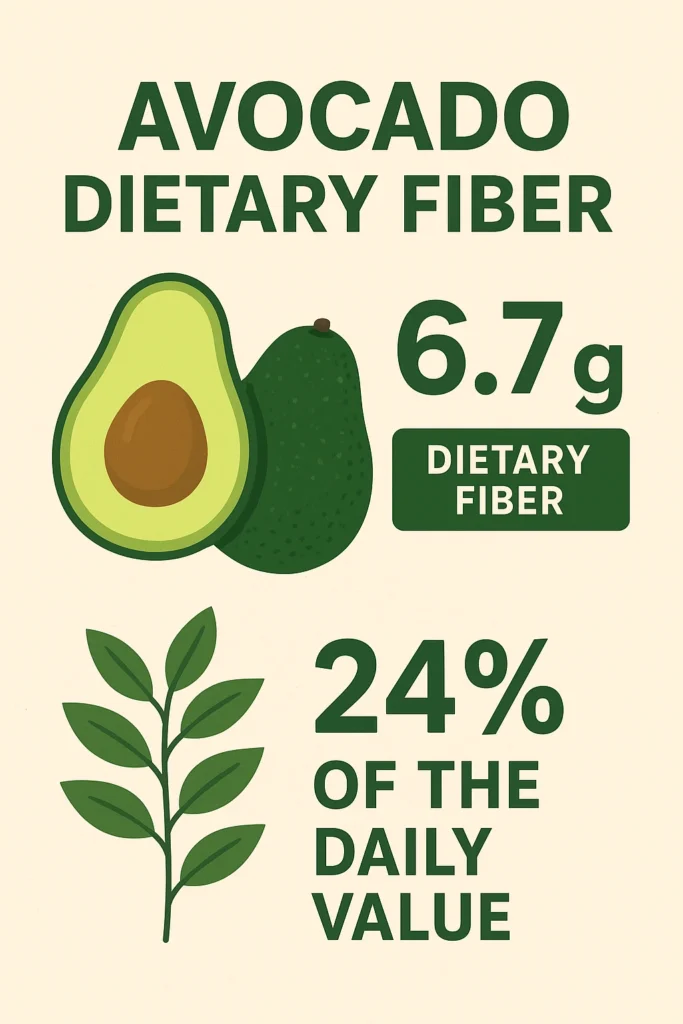
According to USDA FoodData Central, a 100g serving of avocado contains 6.8g of dietary fiber. A whole medium avocado (~136g flesh) delivers roughly 9.2g — close to a third of the 25–38g most adults need per day. A peer-reviewed composition analysis (Foods, 2023) estimated avocado’s fiber splits roughly evenly between soluble and insoluble types, though exact ratios vary by cultivar and ripeness — treat any precise percentage you see quoted elsewhere as an approximation.
How Avocado Compares to Other High-Fiber Foods
Avocado, raw (100g) — 6.8g
Chia seeds (28g / 1 oz) — ~10g
Raspberries, raw (1 cup) — 8.0g
Lentils, cooked (1 cup) — ~15.6g
Black beans, cooked (1 cup) — ~15.0g
Oatmeal, cooked (1 cup) — ~4g
(In WordPress, select this list and use the block editor’s Table block to format it properly — or keep as a simple list.)
Avocado isn’t the single highest-fiber food — legumes and chia beat it gram for gram — but it delivers that fiber alongside healthy fats and very little sugar, which is part of why it fits easily into a daily routine.
1. Supports Digestive Regularity
Fiber adds bulk to stool and helps food move efficiently through the digestive tract — one of dietary fiber’s most well-established, basic functions, and one reason avocado is often recommended for supporting regular digestion.
2. Supports a Healthier Gut Microbiome
A randomized controlled trial from the University of Illinois (Thompson et al., Journal of Nutrition, 2021) had 163 adults eat one avocado daily for 12 weeks. The avocado group showed 26–65% higher levels of fiber-fermenting gut bacteria and 18% higher fecal acetate versus controls. A larger six-month HAT trial in 230 adults confirmed sustained gut microbial diversity improvements over the full six months, most pronounced in participants who started with lower-quality diets.
3. Supports Heart Health
A review of 31 meta-analyses found people with the highest fiber intake had 7–24% lower risk of coronary heart disease and 17–23% lower cardiovascular mortality, largely through fiber’s cholesterol-binding action.
4. Supports Satiety and Weight Management
A randomized crossover trial (Zhu et al., Nutrients, 2019) found that replacing carbohydrate calories with avocado fat and fiber significantly increased fullness hormones (PYY, GLP-1) and suppressed hunger for up to 6 hours. An earlier Loma Linda University study found half an avocado at lunch increased satisfaction by 26% and cut desire to eat by 40% over the following hours.
What About Blood Sugar and Inflammation?
You’ll see avocado linked to blood sugar and inflammation control in a lot of places online, and there is real research here — but it deserves a more careful read than most articles give it.
A dose-response trial (Park et al., Nutrients, 2018) found that replacing carbohydrate with half or whole avocado at breakfast significantly lowered post-meal blood sugar and insulin spikes. A separate 12-week trial from the same research group (Zhang et al., Journal of Nutrition, 2022) found significantly lower C-reactive protein, an inflammation marker, though the trial’s primary insulin-sensitivity measure did not reach statistical significance. A larger observational study of nearly 5,800 adults found no significant difference in inflammation markers between avocado eaters and non-eaters after adjusting for other factors.
Two things worth being transparent about: first, both positive trials tested whole avocado, not isolated fiber, so the effect can’t be attributed to fiber alone. Second, both were conducted by a research group with Hass Avocado Board funding ties — which doesn’t invalidate the results but is worth disclosing. The honest summary is that avocado consumption shows a promising but not yet conclusive link to better blood sugar response and inflammation markers.

3. Helps You Achieve and Maintain a Healthy Weight
If you’re working toward weight management goals, avocado fiber is your secret weapon. Fiber creates a feeling of fullness and satisfaction that lasts for hours after eating. This isn’t just in your head—it’s a physiological response. When fiber reaches your stomach and intestines, it slows digestion and sends signals to your brain that you’re satisfied, naturally reducing the temptation to snack or overeat.
Despite being energy-dense (about 160 calories per 100 grams), avocados have been shown to have similar effects on weight control as low-fat fruits and vegetables. The combination of 72% water and 6.8% dietary fiber means you’re getting substantial volume and nutrition without excessive calories.
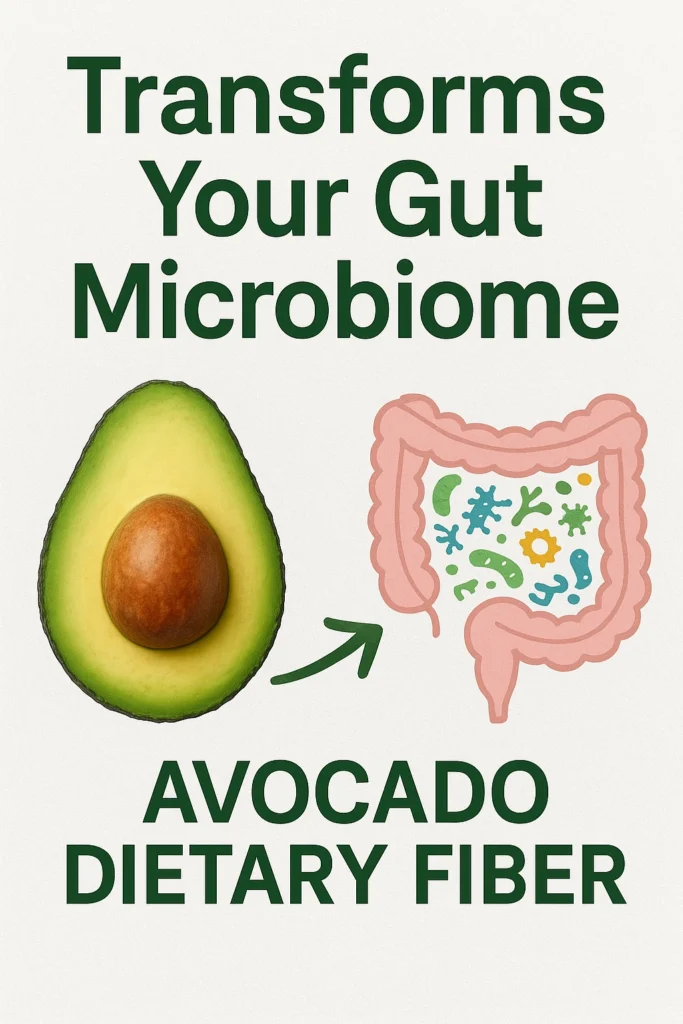
4. Transforms Your Gut Microbiome
Here’s where avocado fiber really shines: its impact on your gut bacteria. Recent groundbreaking research has revealed that eating one avocado daily can significantly alter the composition of your gut microbiome in beneficial ways.
In a study involving adults with overweight or obesity, daily avocado consumption over 12 weeks led to remarkable changes. The avocado group showed increased levels of beneficial bacteria like Faecalibacterium, Lachnospira, and Alistipes—all microbes capable of fermenting fiber. These bacteria increased by 26% to 65% compared to the control group.
Even more impressively, participants who ate avocados daily had 18% higher levels of acetate (a beneficial short-chain fatty acid) in their fecal samples. These short-chain fatty acids are produced when gut bacteria break down fiber, and they play crucial roles in reducing inflammation, supporting the gut lining, and even influencing metabolism throughout your entire body.
A six-month study with 230 adults found that those eating avocados daily showed higher gut microbiota diversity and significant increases in beneficial bacteria like Faecalibacterium prausnitzii. The improvements were even more pronounced in people who started with lower-quality diets, highlighting avocados’ prebiotic potential.
5. Regulates Blood Sugar Levels
Managing blood sugar isn’t just important for people with diabetes—it matters for everyone’s energy levels, mood, and long-term health. The fiber content in avocados serves as a valuable tool for regulating blood glucose levels by slowing down the digestion and absorption of carbohydrates.
When you eat carbohydrates with fiber, the sugar enters your bloodstream more gradually rather than causing the spike-and-crash pattern that leaves you feeling tired and hungry shortly after eating. Soluble fiber specifically helps moderate post-meal blood sugar responses, making avocados an excellent addition to meals for stable, sustained energy.
6. Supports Optimal Cardiovascular Function
Beyond cholesterol reduction, avocado fiber contributes to heart health through multiple pathways. Research has demonstrated that even a modest 5-gram increase in daily fiber intake is associated with significantly lower blood levels of C-reactive protein (CRP), a marker of inflammation closely linked to heart attack risk.
The fiber works synergistically with avocado’s impressive 485 mg of potassium per 100 grams to help regulate blood pressure. This combination addresses multiple cardiovascular risk factors simultaneously, offering comprehensive protection for your heart and blood vessels.
7. May Reduce Risk of Chronic Diseases
The protective effects of avocado fiber extend far beyond your digestive system and heart. Population studies have consistently shown that people who consume the highest amounts of dietary fiber have significantly lower risks of developing multiple chronic conditions.
Research indicates that adequate fiber intake is associated with reduced risk of type 2 diabetes, obesity, certain cancers (including colon cancer), and even overall mortality. The anti-inflammatory properties of fiber, combined with its effects on metabolism and gut health, create a foundation for disease prevention that impacts nearly every system in your body.
Studies have found that consuming at least 25 grams of fiber daily is associated with lower body weight, blood pressure, blood sugar, and cholesterol levels, as well as reduced risk of diabetes, heart disease, stroke, and certain cancers.
How to Maximize Your Avocado Fiber Benefits
Smart Serving Strategies
The official serving size is one-third of a medium avocado (about 50 grams), which provides 3 grams of fiber. However, most people find that half an avocado (about 70 grams) with its 4.6 grams of fiber is more satisfying. If you’re really focused on boosting your fiber intake, a whole avocado delivers that impressive 10-gram fiber payload.
Best Ways to Enjoy Avocados
For Breakfast:
- Mash half an avocado on whole-grain toast with a sprinkle of seeds
- Blend into your morning smoothie with spinach, banana, and almond milk
- Create an avocado and egg scramble with vegetables
For Lunch:
- Add sliced avocado to salads for creamy texture without heavy dressing
- Make a satisfying avocado chicken salad sandwich
- Create Buddha bowls with quinoa, roasted vegetables, and avocado
For Dinner:
- Use mashed avocado as a base for healthy tacos instead of sour cream
- Top grilled fish or chicken with avocado salsa
- Create avocado pasta sauce by blending with herbs and garlic
For Snacks:
- Classic guacamole with vegetables for dipping
- Avocado “fries” baked with a light coating
- Simple avocado halves sprinkled with sea salt and lime juice
Pairing for Maximum Benefits
To maximize fiber intake and overall nutrition, combine avocados with other fiber-rich foods:
- Whole grains (brown rice, quinoa, whole wheat bread)
- Legumes (black beans, chickpeas, lentils)
- Vegetables (leafy greens, broccoli, Brussels sprouts)
- Fruits (berries, apples, pears)
This creates a synergistic effect where you’re not just getting more fiber, but different types of fiber that support various aspects of gut health.
Important Timing Tips
While you can enjoy avocados any time of day, consider these timing strategies:
- Morning: The fiber helps stabilize blood sugar throughout the day
- Before meals: The filling effect may help with portion control
- With nutrient-dense meals: The healthy fats enhance absorption of fat-soluble vitamins
Common Questions About Avocado Fiber
Can I eat avocado every day? Absolutely! Research studies have shown that eating one avocado daily for 12 weeks to 6 months produces beneficial health effects without adverse outcomes. Many nutrition experts recommend daily avocado consumption as part of a balanced diet.
Will the fiber content change if I cook avocados? Fiber is remarkably heat-stable, so cooking doesn’t significantly reduce the fiber content. However, avocados are often most enjoyable and nutrient-dense when eaten fresh.
How quickly will I notice digestive benefits? Many people report improved regularity within a few days of adding avocados to their diet. However, gut microbiome changes take longer—studies show significant improvements after 12 weeks of daily consumption.
Is avocado fiber better than fiber supplements? While both provide benefits, whole food fiber from avocados comes packaged with essential nutrients, healthy fats, and phytochemicals that supplements lack. The combination creates synergistic health effects you can’t get from isolated fiber powder.
Can I eat too much avocado? Avocados are nutrient-dense and calorie-dense. A whole avocado contains about 230-250 calories. While extremely healthy, balance is key. Most people do well with half to one whole avocado daily as part of a varied diet.
Do I need to increase water intake when eating more avocado? Yes! As you increase fiber intake from any source, including avocados, make sure you’re drinking plenty of water (at least 8 glasses daily). Fiber absorbs water to function properly, and adequate hydration prevents potential digestive discomfort.
The Bottom Line: Make Avocados Your Fiber Ally
The fiber in avocados offers a remarkable range of health benefits that extend far beyond basic digestive support. From transforming your gut microbiome to protecting your heart, regulating blood sugar, and potentially reducing your risk of chronic diseases, this nutrient-dense fruit truly earns its superfood status.
What makes avocados particularly special is that all these benefits come in a package that’s actually delicious and easy to incorporate into your daily routine. You don’t need to force yourself to eat bland, chalky foods or down fiber supplements—you can simply enjoy creamy, satisfying avocados and reap the rewards.
Start with half an avocado a day and experiment with different preparations until you find your favorites. Your gut bacteria, heart, waistline, and overall health will thank you.