Avocados are loved across the USA for their creamy taste, healthy fats, and versatility—but what about our pets? Many dog owners wonder, can dogs eat avocado, especially when a piece drops on the floor and their dog grabs it before they can react. The answer isn’t as simple as yes or no. While some parts of the avocado are safe, others can be harmful and even dangerous.
In this guide, we break down everything you need to know so you can protect your dog and make confident decisions. We’ll cover which parts are safe, what to avoid, how much is okay, and when to call your vet.
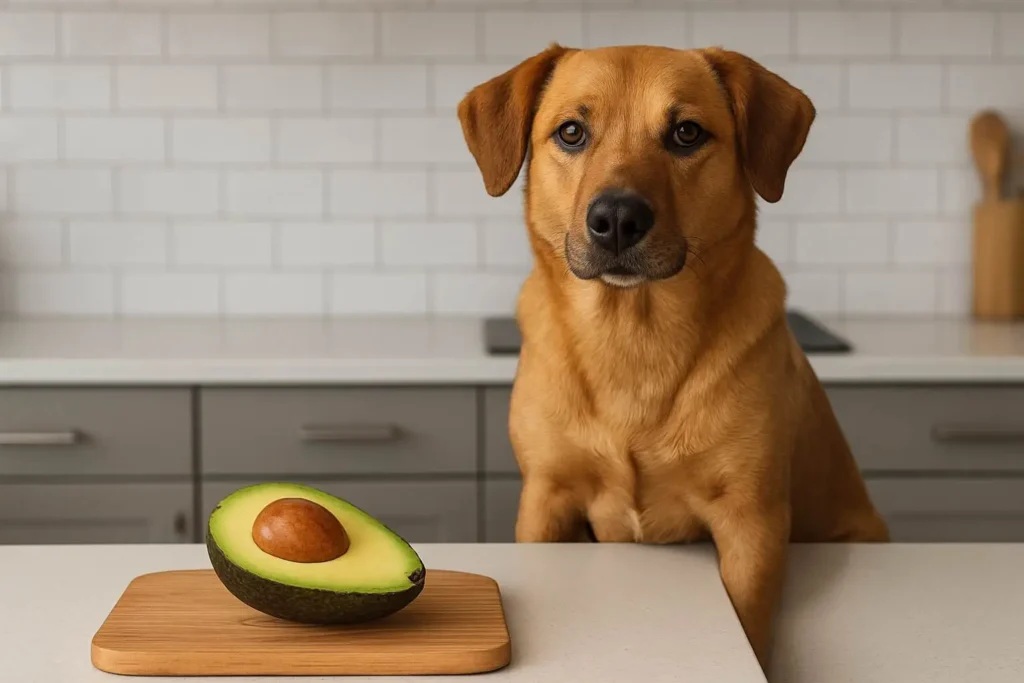
Why Avocado Confuses Dog Owners
Avocados have become a staple in many American homes—found in salads, smoothies, sandwiches, and of course, avocado toast. Because avocados are rich in healthy fats and nutrients, many pet parents assume they might also be good for dogs. However, the confusion begins with something called persin, a natural substance found in different parts of the avocado.
Some animals—like birds, rabbits, and large livestock—are extremely sensitive to persin. Dogs are more tolerant, but that does NOT mean all avocado parts are safe.
What Is Persin and How Does It Affect Dogs?
Persin is a natural antifungal toxin found in the skin, pit, leaves, and bark of the avocado tree. It also exists in the fruit itself but in much smaller amounts.
For dogs, persin can cause:
- Vomiting
- Diarrhea
- Stomach discomfort
- Reduced appetite
The good news:
Most ripe, commercial Hass avocados sold in U.S. grocery stores contain very low levels of persin in the flesh, meaning small amounts are generally safe for many dogs. However, the risk increases significantly if your dog eats the pit, skin, or leaves.
Can Dogs Eat Avocado? A Clear, Simple Answer
Here is the straightforward answer that every dog parent needs:
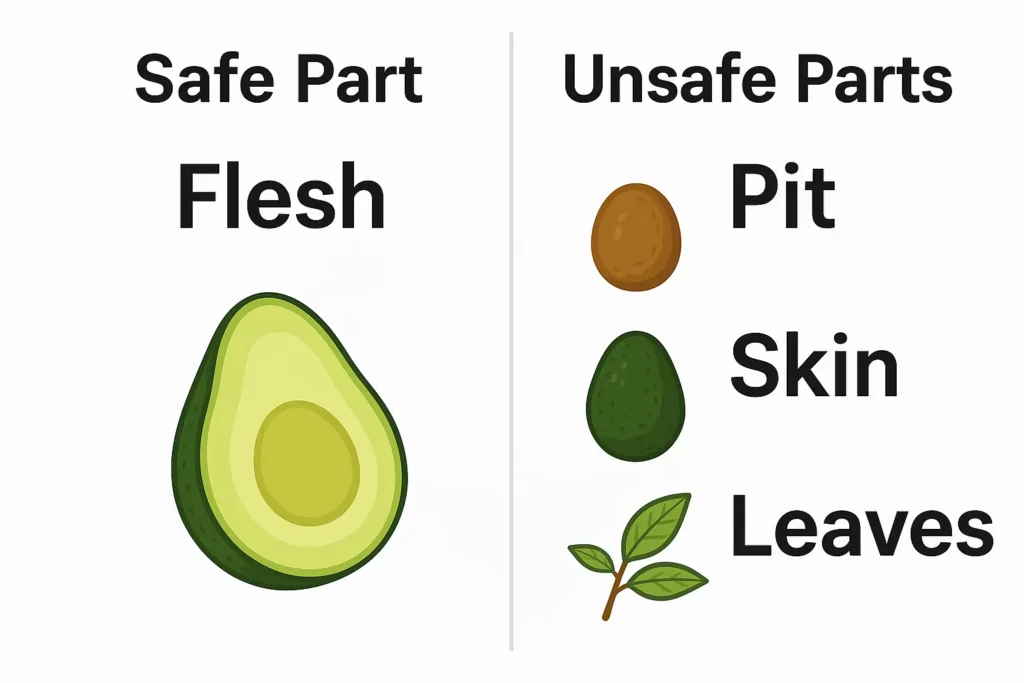
✔ YES – Dogs can eat a small amount of ripe avocado flesh.
✘ NO – Dogs should NOT eat the skin, pit, leaves, or unripe avocado.
Ripe avocado flesh is soft, nutritious, and usually safe in moderation. But avocado is not necessary in your dog’s diet, and too much can cause stomach issues or pancreatitis in sensitive dogs.
Parts of the Avocado That Are Dangerous for Dogs
Understanding which parts are harmful helps prevent panic and accidents.
1. Avocado Pit
The pit is dangerous for two reasons:
- It contains higher persin levels.
- It is a major choking hazard and can cause intestinal blockage, often requiring emergency surgery.
2. Avocado Skin
The skin is tough, hard to digest, and contains more persin than the flesh. Dogs who eat the skin may experience vomiting or irritation.
3. Leaves, Bark, and Unripe Avocados
If you have an avocado tree in your yard, be extra careful. These parts have the highest persin concentration and can cause serious toxicity.
Are There Any Benefits of Avocado Flesh for Dogs?
Yes—ripe avocado flesh does contain helpful nutrients such as:
- Healthy monounsaturated fats for shiny coat and skin
- Fiber for digestion
- Vitamins B6, C, and E for immune support
- Folate for cell health
These benefits apply only to the small amount of ripe flesh.
Avocado should be treated as an occasional treat, not a regular food.
Portion Size: How Much Avocado Can Dogs Eat?
Moderation is everything.
- Small dogs: ½ to 1 teaspoon of mashed ripe avocado
- Medium dogs: 1–2 teaspoons
- Large dogs: 1 tablespoon
Never give:
- Seasoned avocado
- Guacamole
- Avocado mixed with onion or garlic
Also avoid giving avocado to dogs with:
- Pancreatitis
- Sensitive stomachs
- Food allergies
- Vet-restricted diets
Plain, small servings are best.
What to Do If Your Dog Eats Avocado
Sometimes accidents happen. Here’s what to do depending on what part your dog ate.
If your dog ate the flesh
Usually safe. Just watch for:
- Soft stool
- Vomiting
- Low energy
Most dogs stay completely fine.
If your dog ate the skin or a large amount of avocado
Monitor closely and contact your vet if symptoms develop.
If your dog ate the pit
This is an emergency.
Call your veterinarian immediately.
The pit can cause:
- Obstruction
- Choking
- Severe stomach issues
Symptoms That Require Vet Attention
- Vomiting
- Diarrhea
- Trouble breathing
- Bloated stomach
- Weakness or lethargy
Safer Alternatives to Avocado for Dogs
There are plenty of treats that give your dog the same benefits—without the risks.
Dog-Safe Fruits
- Blueberries
- Apples (no seeds)
- Bananas
- Watermelon (seedless)
Dog-Safe Vegetables
- Carrots
- Green beans
- Cucumbers
- Sweet potato (cooked)
Vet-Approved Store Treats
Choose treats with:
- Omega-3 fatty acids
- Joint-support ingredients
- No artificial flavors
Homemade Options
Try simple, dog-friendly ingredients like:
- Mashed pumpkin
- Cooked sweet potato cubes
- Unsweetened applesauce
Image Suggestion:
A happy dog enjoying a bowl of dog-safe fruits and vegetables.

Final Thoughts: Should You Feed Avocado to Dogs?
So, can dogs eat avocado?
Yes—only the ripe flesh, and only in small amounts.
Avocado can offer healthy fats and nutrients, but the risks from the pit, skin, and leaves make many vets recommend choosing safer alternatives. As a pet parent, it’s always best to talk with your veterinarian before adding new foods to your dog’s diet.
Your dog’s long-term health comes first, and simple, dog-safe treats are always a better choice.